

OAN Staff Cory Hawkins
11:53 am – Friday, December 5, 2025
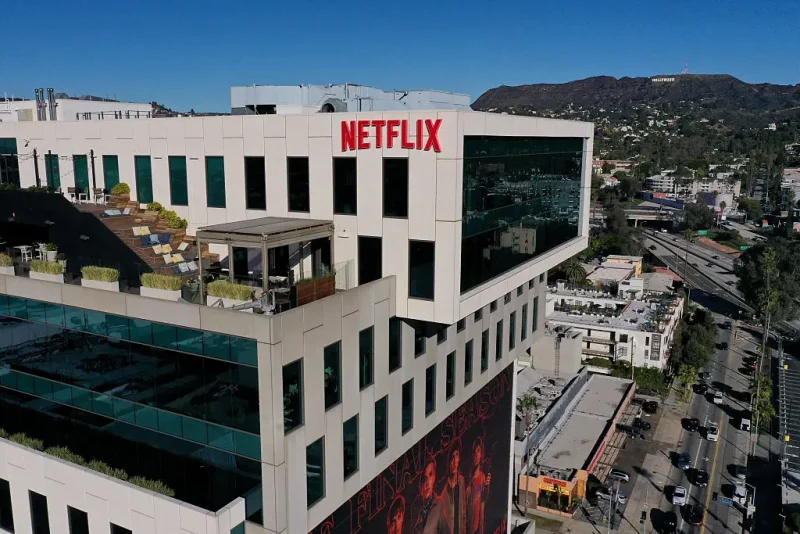
Netflix announced an agreement to acquire Warner Bros. Discovery’s (WBD) studio operations, including Warner Bros. Pictures, Television, and Games, and streaming businesses HBO and Max, in a cash-and-stock deal valued at approximately $82.7 billion enterprise value.
The deal, expected to close, has been described as a major turning point — rocking Hollywood and the media landscape.
This follows WBD’s earlier plan to separate these assets from its linear cable networks, which will spin off into a standalone company.
However, the deal has since sparked widespread discussion about its potential to “disrupt” Hollywood, including consumer concerns over antitrust scrutiny from U.S. and EU regulators, impacts on theatrical releases, job cuts, and possibly higher streaming prices.
It emerged from a competitive bidding process where Netflix outmaneuvered rivals like Paramount Global and Comcast. The transaction is expected to close in 12 to 18 months, pending approvals, with Netflix committing to maintain Warner Bros.’ current operations, including wide theatrical releases.
The cash and stock transaction is valued at $27.75 per WBD share, with a total enterprise value of around $82.7 billion.
The merger brings together two major entertainment businesses, mixing Netflix’s innovation with global reach and Warner Bros’ century-long legacy. Netflix’s pitch was notable, as it included a pledge to continue theatrical releases for movies from Warner Bros. Discovery.
Fan-favorite shows, such as “The Big Bang Theory,” “The Sopranos,” “Game of Thrones,” “The Wizard of Oz,” and the DC universe will join Netflix’s vast portfolio.
“I know some of you are surprised that we’re making this acquisition — and I certainly understand why,” Netflix Co-CEO Ted Sarandos said on a call with investors. “Over the years, we have been known as builders, not buyers … but this is a rare opportunity that’s going to help us achieve our mission to entertain the world, and bring people together through great stories.”
Netflix, as a formidable bidder for Warner Bros. Discovery’s assets, came as a shock to many in the industry due to certain “contradictions” of the company’s “ethos.”
Netflix reps, meanwhile, argue that the market for consuming content is far bigger than just the streaming industry, further stating that the merger is a better deal for consumers who are paying for both platforms.
Nonetheless, the deal ultimately needs approval from federal regulators. The Trump administration will need to evaluate antitrust concerns depending on how it defines the key participants in a rapidly evolving media industry housing tech giants like Apple and Amazon. The deal also needs approval in Europe, where antitrust experts are aware they will face much scrutiny.
This deal does not sit well with everyone, however. A group of anonymous feature film producers sent a letter to congress on Thursday with concerns about Netflix’s potential purchase. “Netflix views any time spent watching a movie in a theater as time not spent on their platform,” the letter said. “They have no incentive to support theatrical exhibition, and they have every incentive to kill it.”
The letter also shared concerns about “monopolistic control” of the streaming market. The letter was unsigned due to the “fear of retaliation.”
OAN‘s own host, Matt Gaetz, sharply criticized the acquisition, urging President Trump to intervene.
Stay informed! Receive breaking news alerts directly to your inbox for free. Subscribe here. https://www.oann.com/alerts
What do YOU think? Click here to jump to the comments!
Sponsored Content Below