

OAN Staff Brooke Mallory
12:42 PM – Monday, January 26, 2026
The remains of the last Israeli hostage held in Gaza have been recovered and identified, Israeli authorities announced on Monday, marking the fulfillment of a key condition in the U.S.-brokered ceasefire that halted the Israel-Hamas war.
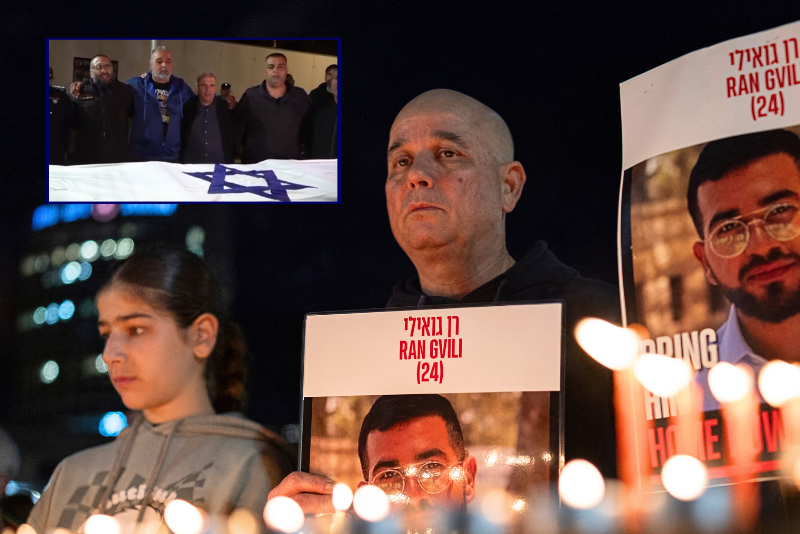
The body of Ran Gvili, a 24-year-old officer working for Israel’s Police Special Forces in 2023, when Hamas attacked the Jewish State in a bloody massacre, was located during a large-scale military operation over the weekend in a cemetery in eastern Gaza City, the Israel Defense Forces (IDF) noted.
The operation reportedly involved exhuming and examining approximately 250 bodies after intelligence indicated Gvili may have been buried there.
The intelligence that led to the recovery of Gvili’s remains came from Israeli military and security sources, accumulated over more than two years of efforts by the IDF Military Intelligence Directorate, in coordination with other agencies like the Shin Bet.
Gvili was killed in combat on the morning of October 7, 2023, while defending Kibbutz Alumim during the Hamas-led attacks that sparked the more than two-year conflict. He was among the 251 people taken hostage that day and brought into Gaza.
Israeli officials identified his remains through dental records and fingerprints, and the body is now being returned to Israel for burial with his family.
Prime Minister Benjamin Netanyahu described the recovery as an “extraordinary achievement” and a fulfillment of Israel’s promise to bring everyone home.
“Ran is a hero of Israel. He went in first, he came out last. He came back,” Netanyahu said.
Defense Minister Israel Katz called it a “painful moment of closure” for the country. “The return of Ran for burial is a painful moment of closing the circle — with the return of the last hostage from Gaza to the soil of Israel,” Katz said in a statement.
Additionally, following the announcement, Hamas spokesman Hazem Qassem claimed that the discovery “confirms Hamas’ commitment to all the requirements of the ceasefire agreement.”
The Shin Bet clarified, however, that the breakthrough came from the interrogation of a Palestinian Islamic Jihad (PIJ) operative captured in Gaza City a month ago. This operative allegedly described the burial site in the Tuffah cemetery. The IDF argued that Hamas did not “provide” the location out of goodwill, but rather “confirmed” the intelligence Israel already had once the military had physically moved the Yellow Line to surround the cemetery, Times of Israel reported.
Prior to this recovery, 20 living hostages and the remains of 27 others had been returned to Israel under the ceasefire’s initial phase. The return of all hostages — living and deceased — was a central requirement of the deal’s first stage.
Even before Gvili’s remains were found, the Trump administration had also indicated readiness to advance to the next phase, which focuses on Gaza’s reconstruction and demilitarization.
Witkoff posted on X, from the @SEPeaceMissions account, announcing the launch of Phase Two of the “President’s 20-Point Plan to End the Gaza Conflict.” He noted that Phase One had already achieved significant progress, including the return of 20 living hostages and the remains of 27 deceased ones explicitly referencing 27 out of 28 deceased hostages recovered, with an expectation for the final one — Gvili — to be returned promptly.
“The U.S. expects Hamas to comply fully with its obligations, including the immediate return of the final deceased hostage. Failure to do so will bring serious consequences.”
Gvili’s family had pressed the Israeli government to delay that transition until his body was recovered, while Israel accused Hamas of delaying the process.
The location where Gvili’s body was found, a Muslim cemetery in eastern Gaza City, was formerly controlled by Hamas, up until this month. The area came under Israeli military control due to unilateral shifts in the post-ceasefire “Yellow Line” demarcation.
Stay informed! Receive breaking news alerts directly to your inbox for free. Subscribe here. https://www.oann.com/alerts
What do YOU think? Click here to jump to the comments!
Sponsored Content Below