

OAN Staff Cory Hawkins and Brooke Mallory
12:49 PM – Friday, December 26, 2025
A federal judge has blocked West Virginia’s groundbreaking ban on artificial food dyes, citing concerns that the law is too “vague.”
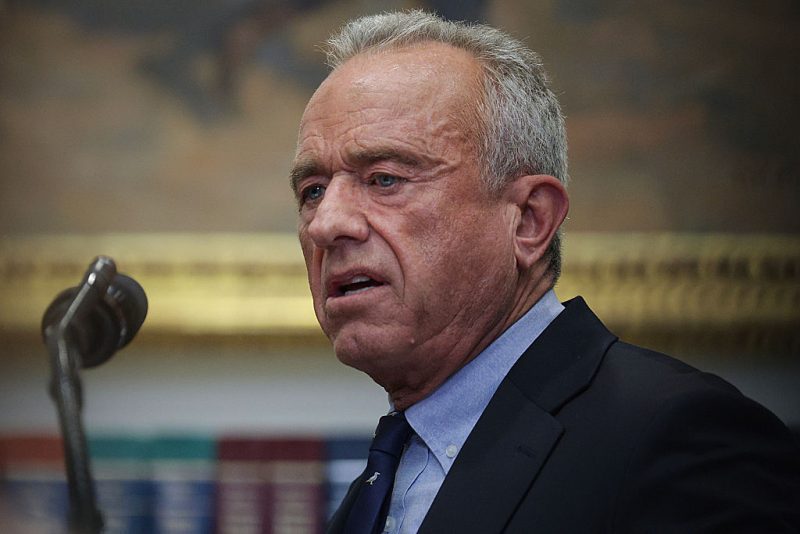
On Tuesday, District Judge Irene Berger temporarily blocked H.B. 2354, the “Make America Healthy Again” (MAHA) campaign bill championed by U.S. Health and Human Services (HHS) Secretary Robert F. Kennedy Jr., which sought to restrict seven synthetic food dyes.
According to Ballotpedia, Judge Berger was nominated by President Barack Obama in July 2009, following recommendations from Democrat Senators Robert Byrd (D-W.Va.), a former Ku Klux Klan (KKK) chapter member who has since died, and Jay Rockefeller (D-W.Va.), 88, the great-grandson of John D. Rockefeller.
Berger argued that the statute could give regulators too much arbitrary power since it “doesn’t clearly define” what substances beyond the listed dyes qualify as “poisonous and injurious,” making compliance and enforcement uncertain.
She did not permanently strike down the law outright at this point, but rather, granted a preliminary injunction that pauses enforcement while the legal challenge continues.
After being singed into law by Governor Patrick Morrisey (R-W. Va.) in March this year, H.B.2354 prohibited synthetic food dyes such as FD&C Blue No. 1, Blue No. 2, Green No. 3, Red No. 3, Red No. 40, Yellow No. 5, and Yellow No. 6.
Studies, including meta-analyses, have shown that certain dyes may increase hyperactivity or worsen attention problems in susceptible children. Certain dyes may also interact with neurotransmitter systems or affect histamine responses, influencing behavior over time.
The law reflects Kennedy’s goal of reducing disparities in food safety, eliminating unnecessary and unhealthy additives that offer no nutritional or functional benefit, and protecting children from potential health and behavioral risks. He frequently links studies showing how these particular dyes can affect neurobehavioral issues such as hyperactivity, low attention spans, irritability, sleep disturbances, while further exacerbating ADHD symptoms.
Kennedy has also emphasized that the petroleum-derived dyes are “poisonous compounds” offering no health value while threatening “real, measurable dangers” without consumer consent.
Berger’s ruling highlights the ongoing tension between industry groups, which favor federally standardized, cost-effective regulations, and public health advocates, who push for restrictions on unhealthy additives commonly found in U.S. processed foods — substances that are already heavily limited or banned in Europe and Canada.
H.B. 2354 later added a provision as well, with Section 18-5D-3A stating the effort to ban these dyes “as an ingredient in any meal served in a school nutrition program,” with the only exception of school fund raising events on or away from campus.
The seven synthetic food dyes being targeted by RFK Jr. are commonly found in many processed foods marketed to children. The dyes create vibrant, appealing colors to attract kids, and the top three dyes (Red 40, Yellow 5, and Yellow 6) account for 90% of all synthetic dye usage in food in the United States.
Red 3 is already banned by the FDA, with lab tests on rats showcasing rapid development of thyroid cancer who were fed doses of the dye.
“The statute arbitrarily and irrationally targets color additives, no U.S. agency — state or federal — nor any court has ever found to be unsafe,” the International Association of Color Manufacturers (IACM) stated, claiming the ban lacks “scientific evidence.” The IACM represents companies that make money in producing and selling food dyes, so their benefits are closely tied to the economic and regulatory environment of the industry.
Fewer restrictions mean wider use in processed foods, beverages, candies, and snacks, which boosts revenues for their member companies.
However, despite Berger ruling in IACM’s favor, she rejected their claim that the policy was an unlawful bill-of-attainder, or a law singling out a person or group. Berger’s ruling added that several food additives were specifically named in the law, and the use of the term “poisonous and injurious” lacked “criteria guiding its determination,” potentially harming dye manufacturers.
“If a parent notifies [the West Virginia Department of Health] that they believe their child is sensitive to a color additive, is that a sufficient basis for a color additive to be deemed ‘poisonous and injurious,’ or must the WVDOH conduct a further investigation? It is far from clear,” Berger said.
The injunction is temporary and does not permanently invalidate West Virginia’s law.
Enforcement of the broader statewide ban, set to take effect in 2028, was not yet underway. A separate provision banning these additives in school nutrition programs, which took effect on August 1, 2025, remains in force.
Several other states, including California, Virginia, and Utah, have enacted or considered similar restrictions on synthetic food dyes in schools.
Stay informed! Receive breaking news blasts directly to your inbox for free. Subscribe here. https://www.oann.com/alerts
What do YOU think? Click here to jump to the comments!
Sponsored Content Below