

OAN Commentary by: Jonathan Dever
Friday, January 16, 2026
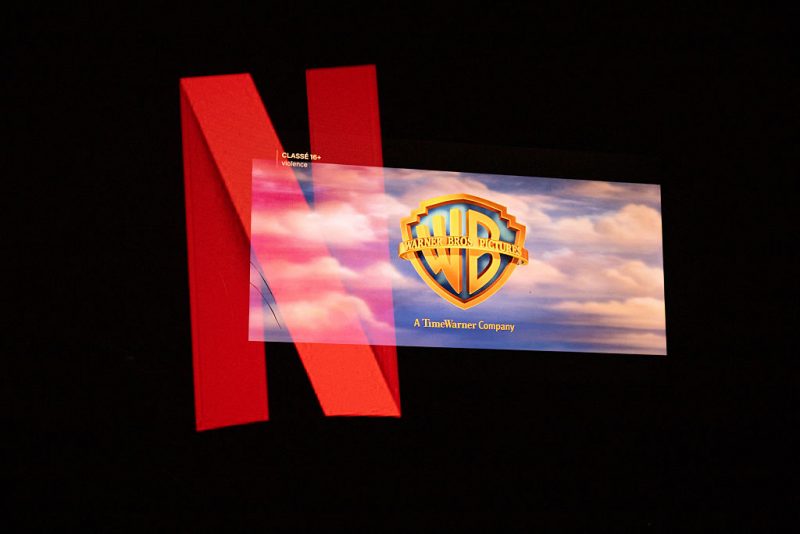
Republicans and Democrats disagree on a lot these days, but they seem to agree on one thing: Netflix’s attempt to buy Warner Bros. Discovery is a bad idea.
Last Wednesday, lawmakers on a House Judiciary subcommittee lined up to take shots at the proposed deal, valued at more than $70 billion. “Americans don’t like these mergers. They don’t want a few giant companies controlling what they see and what they hear,” declared Representative Becca Balint, a Democrat from Vermont.
It wasn’t just Democrats. Republican Rep. Darrell Issa, the chair of the subcommittee, was perhaps Netflix’s loudest critic at the hearing.
The Trump administration has also been expressing concerns since December, telling CNBC they view the deal with “heavy skepticism.” Trump himself warned that the merger could be a “problem,” and on Sunday, he shared a One America News Network article that suggested his administration should undertake antitrust action against the company if the deal moves forward.
This strong bipartisan coalition right: allowing Netflix to acquire Warner Bros. Discovery would work against the interests of the American people.
The antitrust case against the merger is fairly straightforward. Netflix is already an entertainment giant, and if it acquires Warner Bros. Discovery, it would gain control of everything from Harry Potter to CNN to Game of Thrones to the Food Network to DC Comics to the sports website Bleacher Report. This would make it the most powerful media company in history.
To put in perspective just how anticompetitive such a behemoth would be, Netflix would control between 30 and 40 percent of the entire content streaming market. Netflix already has more than 300 million subscribers and is the undisputed gorilla in the streaming sector. By acquiring Warner Bros. Discovery, it would go from a gorilla to a king.
Also consider that Warner Bros. Discovery owns HBO, whose Max is currently a streaming service rival to Netflix. Under the merger, Netflix and Max would cease to be competitors and instead become partners. How is that good for innovation?
The underpinning logic of a market economy is that competition makes goods and services better for consumers by ensuring businesses have to compete and thus make their products the best they can be. Yet if those same businesses are gobbled up by a single company, they lose that competitive edge and the motivation toward quality.
There’s been an enormous amount of consolidation in the entertainment industry recently, while at the same time critics complain that the output has gone downhill. Movies are still dominated by superheroes and sequels. The most creative films come from smaller indie outfits. Netflix’s number one show is still Stranger Things, which debuted almost a decade ago.
The logic of markets holds up: less competition has meant more stagnation. This is something the Trump administration must keep in mind as it weighs whether to approve the Netflix-Warner Bros. merger.
One reason progressives oppose the merger is they’re worried it will facilitate media bias. “The White House must not be allowed to use the merger process as another tool to bend the media to its will,” said Representative Jerry Nadler, a Democrat from New York.
It’s easy to roll your eyes—the left is worried about a biased press?—but this is an area where Democrats and Republicans have common ground.
Big companies aren’t always bad, but the kind of consolidation inherent to the Netflix-Warner Bros. merger would be bad for markets, bad for creativity, and bad for a diverse and pluralistic press. Instead of innovation, we’d get stifling conformity. Instead of competition, we’d get a single lumbering entity disconnected from the customers it claims to serve.
Netflix might be the gorilla of the streaming market but other services like Amazon and Hulu have been catching up. And if you combine all of Disney’s streaming properties (Hulu, Disney+, and ESPN+), they actually have more U.S.-based subscribers than Netflix.
This is the real reason Netflix wants Warner Bros. Discovery: to stop at least one competitor from breathing down its neck. It’s exactly this competition that the rest of us should be encouraging. That is why Trump and both sides of the political aisle are standing together and telling Netflix “no thanks.”
(Views expressed by guest commentators may not reflect the views of OAN or its affiliates.)
Jonathan Dever is an attorney and member of the Republican National Lawyers Association. He is a former member of the Ohio House of Representatives.
What do YOU think? Click here to jump to the comments!
Sponsored Content Below