

OAN Staff Cory Hawkins
5:25 PM – Monday, December 29, 2025
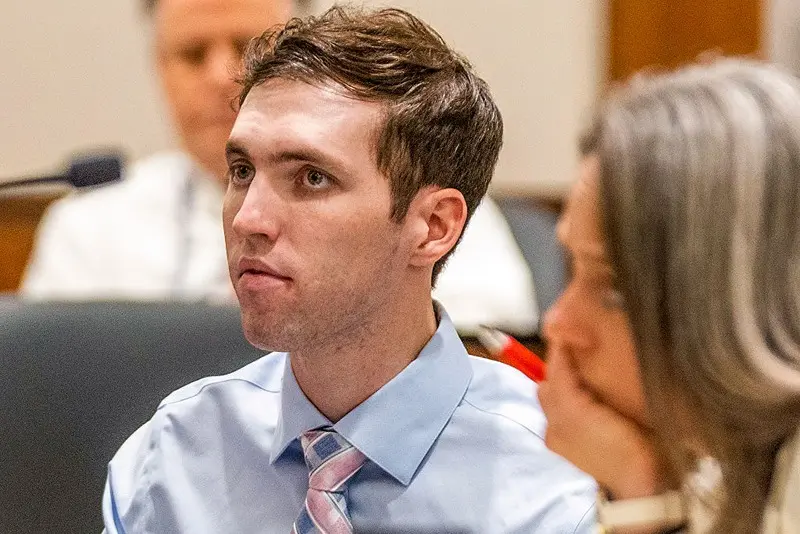
Utah District Judge Tony Graf ordered the release of a redacted transcript from an October closed-door hearing in the case of Tyler Robinson, the 22-year-old suspect accused of assassinating conservative activist Charlie Kirk.
As the year draws to a close, media coverage has intensified once more in relation to the Kirk assassination, fueled by Robinson’s looming capital trial.
The judge’s most recent decision follows a push from numerous media outlets for increased public access, citing the need for transparency in such a high-profile case. While Judge Graf denied a motion for the media to intervene as formal parties, he reaffirmed the court’s commitment to openness by authorizing the transcript’s release.
The judge announced on Monday, during a 20-minute video hearing, that the October 24th private session in Robinson’s case would be released with certain redactions by the end of the day, but audio could take up to two weeks to be made public.
Robinson, 22, was absent from the camera’s view during the video hearing, but he could be heard replying “Yes, your honor,” when asked if he was present.
The October hearing, which lasted about two hours, addressed whether Robinson could appear in civilian clothing and remain unshackled during his court hearings. Graf has since allowed Robinson to wear plain clothes. However, he remained firm on keeping the defendant restrained in court.
Graf explained that one page, about 246 words, would be redacted from the 80-page transcript due to “privacy and safety concerns.” He determined the only necessary redactions were comments focusing on courthouse security.
“This case generates extraordinary, ongoing national and international attention,” he said, “some of which is threatening in nature to the parties, the representatives, and non-party participants. The safety and well-being of all involved in this matter outweighs the interests of the public that are served by open court records.”
Robinson appeared in person in court for the first time earlier this month, while his lawyers argued that the press should not be permitted to film the hearings due to the potential risk of prejudicing jurors and compromising a fair trial. Nonetheless, several hours of that hearing were conducted in private — excluding both the press and public.
Defense attorney Staci Visser had challenged the media’s push for transparency by pointing out a breach of courtroom decorum, noting that news outlets had already disregarded the judge’s orders by broadcasting footage of Robinson in his shackles.
“We don’t want the chaos that is out in the media in this courtroom,” Visser said at the time.
Robinson’s attorneys have also argued that the entire Utah County Attorney’s Office should be disqualified due to a profound conflict of interest, alleging that a senior prosecutor received harrowing, real-time text messages from a family member who was only 85 feet away from the shooting when it occurred. By sharing these traumatic updates with the County Attorney as the event unfolded, the defense contends the office became too emotionally compromised to maintain the impartiality required in a capital case.
Utah is one of 27 states in the U.S. where the death penalty is currently on the books, reserved for aggravated murder, which Robinson is accused of.
Stay informed! Receive breaking news alerts directly to your inbox for free. Subscribe here. https://www.oann.com/alerts
What do YOU think? Click here to jump to the comments!
Sponsored Content Below