

OAN Staff Katherine Mosack
11:05 AM – Wednesday, January 7, 2026
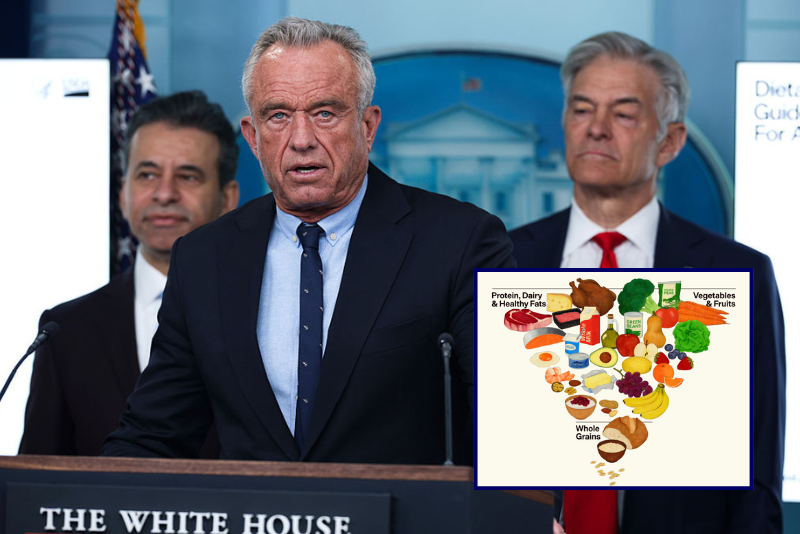
In a move to restore “science and common sense” to American nutrition, U.S. Health and Human Services (HHS) Secretary Robert F. Kennedy Jr. (RFK Jr.) announced major changes to dietary guidelines that fundamentally invert the traditional food pyramid.
The administration has framed this as a “modernized” reset of federal nutrition policy, specifically targeting what they describe as the “inaccurate” and “outdated” science of previous decades.
At the first White House press conference of the New Year on Wednesday, Kennedy noted that “for decades, Americans have grown sicker while healthcare costs soared.” He promised that the new federal guidelines will “revolutionize our nation’s food culture and make America healthy again.”
While the traditional food pyramid was a genuine attempt to simplify nutrition, modern science has shown that many of its core recommendations are flawed, oversimplified, or influenced more by the agricultural industry than by accurate health data, health experts say. For example, the traditional pyramid lumps all “meat, poultry, fish, dry beans, eggs, and nuts” into one category. This suggests that a piece of overly processed deli meat is nutritionally identical to a piece of salmon or a bowl of lentils, which is not accurate.
In the Wednesday news release, the HHS summarizes modern health expert advice, found in the nine-page 2025-2030 guidelines:
- Prioritize protein at every meal
- Consume full-fat dairy with no added sugars
- Eat vegetables and fruits throughout the day, focusing on whole forms
- Incorporate healthy fats from whole foods — such as meats, seafood, eggs, nuts, seeds, olives, and avocados
- Focus on whole grains while sharply reducing refined carbohydrates
- Limit highly processed foods, added sugars, and artificial additives
- Eat the right amount for you, based on age, sex, size, and activity level
- Choose water or other unsweetened beverages to support hydration
- Limit alcohol consumption for better overall health
“Nearly 90% of health care spending goes toward treating chronic disease,” the HHS stated, explaining that these conditions are often “linked to diet and lifestyle.” Additionally, “more that 70% of American adults are overweight or obese, and nearly 1 in 3 adolescents has prediabetes.”
Kennedy noted that chronic diseases disqualify many young Americans from military service, which threatens “social readiness and limiting opportunity.”
Centers for Medicare & Medicaid Services (CMS) Administrator Mehmet Oz also emphasized that the country’s health crisis limits opportunity within the U.S. workforce.
“If we’re able to get the average American, who today retires, on average, at age 61 — get them just to work one year longer, because they feel so vital, so strong, so bullish about their future because they’re feeding their bodies nutrients that are essential to their high-functioning productivity, we will increase the overall GDP (gross domestic product) in our nation by trillions of dollars,” Oz propounded. “So, we will reduce healthcare expenses, at the same time we jazz up the U.S. economy.”
U.S. Commissioner of Food and Drugs Dr. Martin Makary emphasized that the old guidelines, including the “corrupt food pyramid” had such low recommendations for protein consumption that the new guidelines would increase them by 50-100%.
“The old protein guidelines were to prevent starvation and withering away,” Makary said. “These new protein guidelines are designed for American kids to thrive, and based on science, not on dogma.”
“We have 40% of our kids now with a chronic disease. It is not their fault! This is something that is the result of bad advice from the government and a medical establishment that for decades peddled research from a flawed 1960’s model,” he continued. “Today, we are setting the record state. This is not a willpower problem for our nation’s kids. This is something adults have done to kids, and we’re going to fix it.”
Kennedy explained that the new guidelines align with President Donald Trump’s focus on long-term affordability by lowering healthcare costs. He argued that as Americans become healthier, the demand for expensive hospital visits will naturally decrease.
“The idea that a cheap meal made of processed food is cheap is an illusion, ‘cause you’re paying for it on the back end,” Kennedy said. “You’re paying for it with diabetes, with obesity, with illness.”
The guidelines include suggested alterations tailored to infants, children, adolescents, pregnant and nursing women, older adults, individuals with chronic disease, and vegetarians and vegans, in order to ensure “nutritional adequacy across every stage of life.” The new pyramid also has its own website with answers to frequently asked questions (FAQ).
“At long last, we are realigning our food system to support American farmers, ranchers, and companies that grow and produce real food. Farmers and ranchers are at the forefront of the solution, and that means more protein, dairy, vegetables, fruits, healthy fats, and whole grains on American dinner tables,” said U.S. Department of Agriculture (USDA) Secretary Brooke Rollins in the statement.
President Trump recently struck deals with multiple major pharmaceutical companies to secure “Most Favored Nation” prescription drug prices, partnering with the new pyramid to both lower the cost of medications and lower Americans’ reliance on them.
Stay informed! Receive breaking news blasts directly to your inbox for free. Subscribe here. https://www.oann.com/alerts
What do YOU think? Click here to jump to the comments!
Sponsored Content Below