

OAN Staff Cory Hawkins
6:44 PM – Wednesday, December 10, 2025
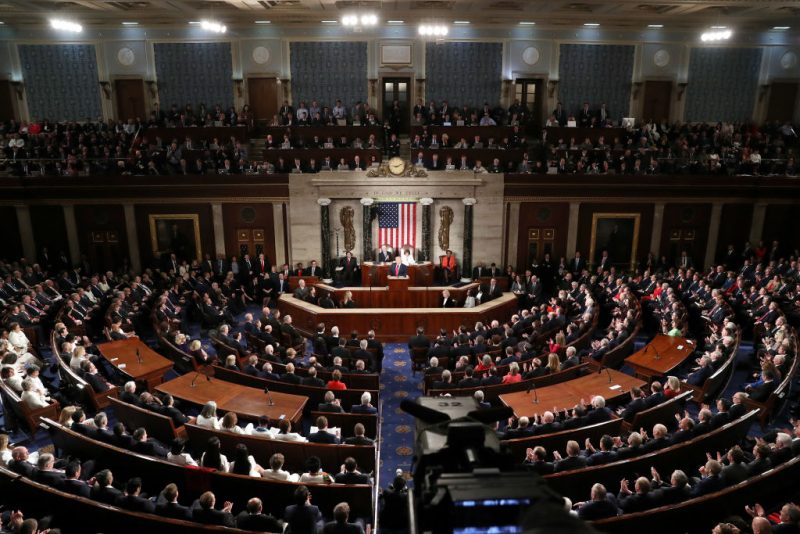
The House of Representatives passed the annual defense bill, the National Defense Authorization Act (NDAA) for Fiscal Year 2026, highlighting the $900.6 billion budget that increases troop pay by 4%, supports developing technologies like the Golden Dome defense system, promotes military readiness, and helps deter China and Russia.
The House voted 312-112, with 94 Democrats and 18 Republicans opposed to the bill.
An earlier procedural vote on the legislation barely passed 215-211 after four Republicans, Reps. Anna Paulina Luna (R-Fla.), Marjorie Taylor Greene (R-Ga.), Tim Burchett (R-Tenn.), and Lauren Boebert (R-Colo.), all changed their votes from no to yes after receiving assurances from GOP leadership.
Rep. Thomas Massie (R-Ky.) was the only Republican to vote “no.” Massie sharply criticized the continued support for Ukraine in the legislation, as it includes $800 million in security assistance for Ukraine through 2027, enabling Kyiv to purchase weapons directly from U.S. defense companies.
“I would vote for an increase in pay for soldiers, but they put that in there to try to get you to vote for all the other stuff. There’s still a lot of waste in the bill,” Massie stated.
The bill is expected to advance to the Senate next week.
Several conservative leaders expressed concern that the bill lacks provisions to block the creation of a central bank digital currency (CBDC), which they fear could fundamentally alter electronic payments through the Federal Reserve.
Many conservatives championed a CBDC ban as a critical privacy and civil-liberties safeguard, arguing that a government-issued digital dollar would empower federal agencies to monitor or even restrict individual transactions.
A House leadership source who reached out to the press noted that the proposed CBDC prohibition ultimately collapsed during negotiations over a separate bipartisan housing package.
Additionally, House Armed Services Committee Chairman Mike Rogers (R-Ala.) emphasized that the legislation would also overhaul the Pentagon’s notoriously slow and bureaucratic acquisition process, enabling U.S. troops to receive vital equipment far more quickly — instead of waiting up to a decade while adversaries deploy new technologies in months.
The bill also repeals the 2002 Authorization for Use of Military Force in Iraq and lifts sanctions on Syria that Congress had imposed during the first Trump administration.
Stay informed! Receive breaking news alerts directly to your inbox for free. Subscribe here. https://www.oann.com/alerts
What do YOU think? Click here to jump to the comments!
Sponsored Content Below