

OAN Staff Cory Hawkins
4:54 PM – Monday, January 5, 2026
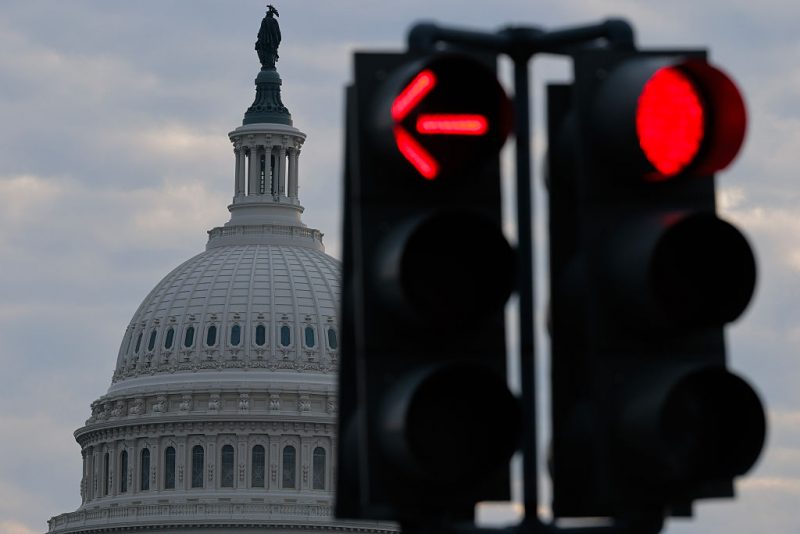
Lawmakers on Capitol Hill unveiled a $174 billion spending package on Monday, a critical step in a race against the clock to avoid a government shutdown — as the current funding expires on January 30, 2026.
Following a 43-day shutdown that ended in November 2025, lawmakers are aiming to pass funding bills in smaller packages rather than a single omnibus measure ahead of the deadline to avoid another shutdown.
The $174 billion bipartisan spending package would fund the Departments of Commerce, Energy, Interior, and Justice, as well as water programs, the EPA, and federal science initiatives, through the September 30th end of the fiscal year.
Notably, it includes just over $3 billion in “Community Project Funding,” or earmarks, which lawmakers request for local initiatives, with a focus on areas such as community safety, affordable energy, flood control and water infrastructure.
The largest chunk of funding would reportedly go toward the Commerce and Justice Departments, as well as related agencies. It provides roughly $78 billion in funding for the FBI, NASA, the U.S. Marshals Service and the Bureau of Prisons, among other areas.
Coming in second is the Energy and Water Development funding bill, which allocates just over $58 billion, primarily to the Department of Energy. About $25 billion of that is directed to the National Nuclear Security Administration, with the largest share supporting nuclear weapons activities and stockpile modernization.
The Interior, Environment, and Related Agencies appropriations bill would provide roughly $38 billion in discretionary funding for the Department of the Interior, the Environmental Protection Agency, the U.S. Forest Service (within Agriculture), and other related agencies and programs.
The package emerged during negotiations between the House and Senate Appropriations Committees, with support from both Republicans and Democrats.
“This bipartisan, bicameral package reflects steady progress toward completing FY26 funding responsibly. It invests in priorities crucial to the American people: making our communities safer, supporting affordable and reliable energy, and responsibly managing vital resources,” House Appropriations Committee Chairman Tom Cole, (R-Okla.), said in a statement. “It also delivers critical community projects nationwide, along with investments in water infrastructure, ports, and flood control that protect localities and keep commerce moving.”
House Speaker Mike Johnson (R-La.) called the bill a step forward to avoid a “bloated omnibus bill” and said it would “spend less than another continuing resolution,” a move aimed at calming concerned conservative fiscal hawks.
However, on the Democrat side, Rep. Rosa DeLauro (D-Conn.) described the bill as “a forceful rejection of draconian cuts to public services proposed by the Trump Administration and Republicans in Congress.”
Meanwhile, it remains unclear whether lawmakers like Chip Roy (R-Texas) and Ralph Norman (R-S.C.), who sit on the House Rules Committee, support the spending bill. The House Rules Committee acts as the final gatekeeper before legislation reaches a full House vote.
House Freedom Caucus Chairman Andy Harris (R-Md.) told Fox News in an interview, “We are still going through this minibus — but it appears to be in line with keeping this year’s discretionary spending below last year’s level — which is a good first step to actually lowering spending next year to control our runaway federal debt.”
The House Rules Committee is expected to meet on Tuesday night to advance the spending legislation, with a final House vote likely on Thursday. A procedural “rule vote” will require support from nearly all House Republicans in order to move the bill forward.
Senate Minority Leader Chuck Schumer (D‑N.Y.) said before Congress’ holiday break that Democrats’ goal is to complete the remaining funding bills by the January 30th deadline and that “we want to get through the process.”
With bitter political fighting in Washington, a government shutdown remains possible, though both parties say they do not want a repeat of the October shutdown.
“I don’t want to see another government shutdown,” Senator Dick Durbin (D-Ill.) said. “I’ve had enough of them.”
“No doubt, the [Trump] administration wants to avoid a shutdown, and they’re clearly sending the message that we need to get regular order appropriations moving,” Senator Thom Tillis (R-N.C.) added.
Stay informed! Receive breaking news blasts directly to your inbox for free. Subscribe here. https://www.oann.com/alerts
What do YOU think? Click here to jump to the comments!
Sponsored Content Below