

OAN Staff Cory Hawkins
6:05 PM – Wednesday, December 17, 2025
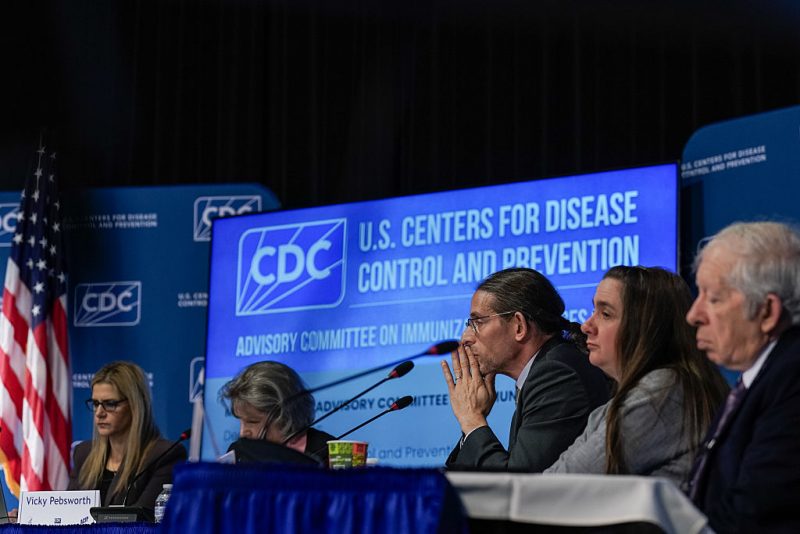
The Centers for Disease Control and Prevention (CDC) now officially recommends “individual-based decision-making” for women deciding whether to give the hepatitis-B to newborns within 24 hours of birth, as opposed to universally recommending that all newborns receive the hepatitis B vaccine.
Individual-based decision-making means parents and health care providers should consider vaccine benefits, vaccine risks, and infection risks. Parents should consult with their healthcare provider and decide if and when their child will begin the hepatitis B vaccine.
The proposed recommendations will not affect the supply of the hepatitis B vaccine, and the vaccine will still be offered if a mother chooses to take it. The agency’s vaccine advisory committee voted for the recommendation earlier this month, uprooting more than three decades of agency recommendations.
“We are restoring the balance of informed consent to parents whose newborns face little risk of contracting hepatitis B,” O’Neill stated.
Since 1991, the CDC had recommended parents to allow vaccination at birth. The change in policy caused a flood of backlash from health experts, strongly suggesting O’Neill to ignore the suggested change and uphold the current recommendation.
The CDC now suggests waiting at least 2 months for babies to receive their first hepatitis B shots if they do not receive the birth dose.
However, the CDC still recommends babies get the shot within the day of birth if their mothers test positive for hepatitis B or if the mother’s infection status is unknown.
Furthermore, hepatitis B vaccination shortly after birth has never been mandatory, and doctors argued it was always a discussion between providers and parents. Universal vaccination for newborns is still recommended by medical groups such as the Infectious Diseases Society of America and the American Academy of Pediatrics (AAP).
“Since the ACIP voted to downgrade the recommendation for a birth dose of hepatitis B vaccine, pediatricians are already reporting more parents declining to give their child this critical dose,” AAP President Dr. Susan Kressly reported. “As a pediatrician, this is heartbreaking when we have a vaccine that can prevent so many infections, and it is deeply disappointing to see the continued dismissal of expertise to inform recommendations that have broad implications on the health of America’s children.”
Hepatitis B is a liver infection caused by an infectious virus. Transmission typically happens through blood or genital fluids from an infected person and passage of the infection can easily occur during childbirth.
Many adults clear the acute hepatitis B infection. However, acute infections can lead to chronic hepatitis B, which is linked to increased risk of liver cancer, organ failure and cirrhosis, and scarring of the liver. Statistics show people with chronic hepatitis B are 70% to 85% more likely to have a premature death.
Stay informed! Receive breaking news blasts directly to your inbox for free. Subscribe here. https://www.oann.com/alerts
What do YOU think? Click here to jump to the comments!
Sponsored Content Below